Stephanie Menei - Aboard the Titanic
Meet Our Members
Aboard the Titanic
Nine Daughters were on the Titanic the fateful night it sank into the cold North Atlantic Ocean.
By Lena Anthony
In 1999, on the heels of the release of James Cameron’s wildly successful romantic disaster movie, “Titanic,” Stephanie Menei traveled to Belfast, Northern Ireland. She saw the Harland and Wolff Shipbuilding Port, where the Titanic (the real one) was built. “I feel like I’ve always been fascinated by the Titanic, but upon reflection, I think it was this moment that started it.”
A career, a marriage, a husband’s cross-country work transfer—typical life circumstances prevented her from doing much with this fascination for over a decade. That is, until 2014, when Mrs. Menei, the newly minted Chapter Regent of Copper State DAR Chapter, Litchfield Park, Arizona, asked her helpful chapter librarian, Dr. Cyndee Krause, a simple question: “Do you think there were any DAR members on the Titanic?”
Two months later, Mrs. Krause had an answer: She had discovered eight Daughters were on board. Another DAR member in Delaware recently identified a ninth. All of them were first-class passengers who survived the disaster. Some of their husbands and sons, however, were not as fortunate. These are their stories—or what is known of them—drawn primarily from the official transcripts of the 1912 Senate investigation.
A Changed Woman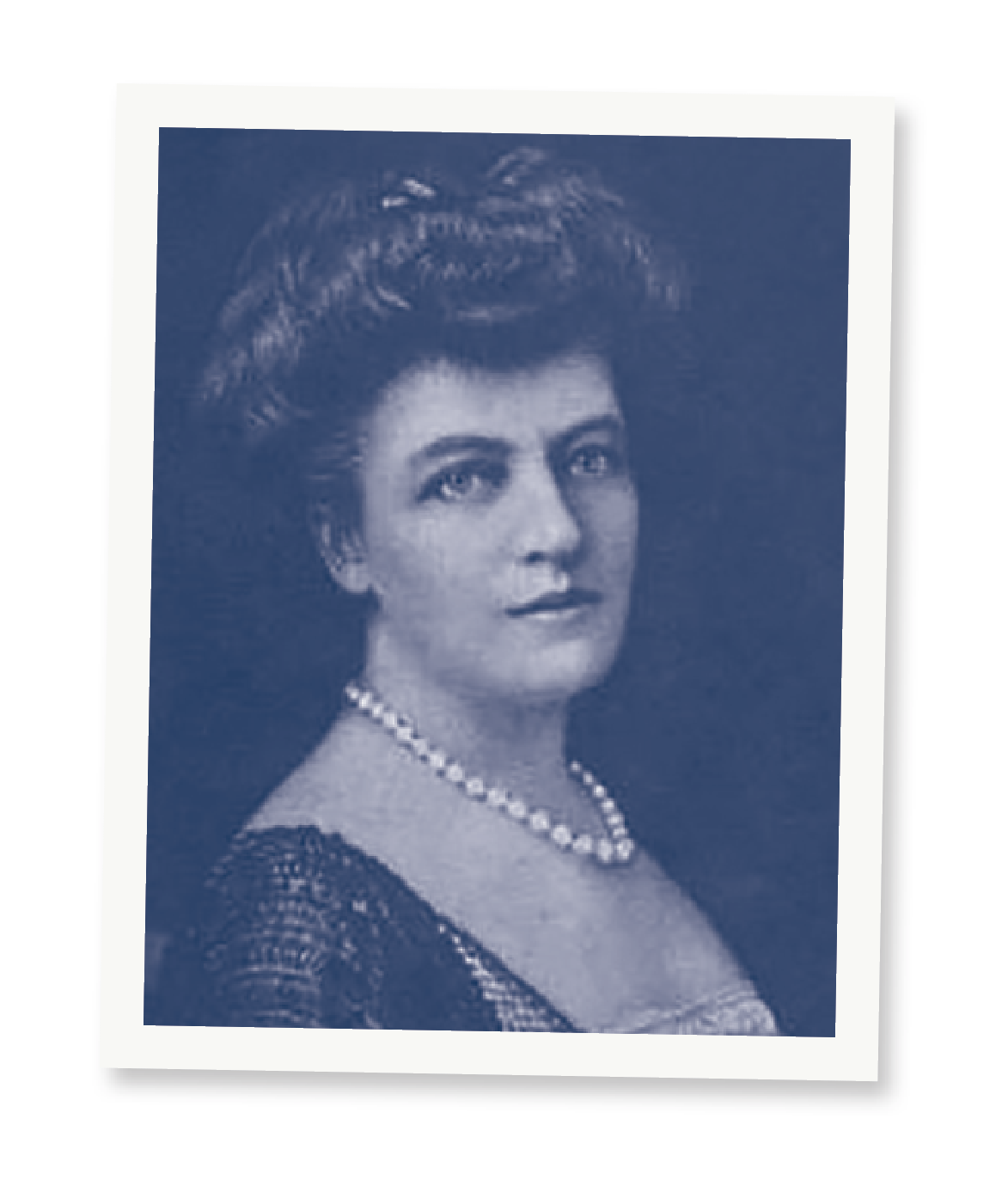 A Daughter from Philadelphia, Mrs. Eleanor Widener was a wealthy socialite who had traveled to Europe with her husband, George, and son, Harry, searching for a chef for their new hotel. Their maid and valet joined them on their journey. The same night the Titanic struck an iceberg, Mrs. Widener held a dinner in honor of the ship’s captain, Edward John Smith. While Mrs. Widener and her maid survived by helping operate the oars in Lifeboat 4, the rest of her party perished when the ship sank.
As reported by fellow first-class passenger Emily Borie Ryerson, who provided testimony to the U.S. Senate, Lifeboat 4 was filled with heroes from the start. Women like Mrs. Widener, who likely had never rowed before that fateful night, responded to the call to “Pull for your lives, or you’ll be sucked under!” They also rescued between 14 and 17 men from the water or overturned boats and watched as some of them died in their waterlogged lifeboat. “The cries for help of people drowning all around us seemed to go on forever,” Ryerson testified.
After her return to New York, Mrs. Widener swore in an affidavit that “Captain Smith drank absolutely no wine or intoxicating liquor of any kind whatever at the dinner,” which helped to clear him of all charges. Despite her survival, Mrs. Widener emerged from the disaster a changed woman. In honor of her son, a 1907 graduate of Harvard University who collected rare and valuable books, she donated $2 million to his alma mater to construct a library. She also helped fund the reconstruction of St. Paul’s Episcopal Church in Philadelphia as a memorial to her husband.
Ella Holmes White, a Daughter from New York, was also on the Titanic with her maid. They made it out alive on Lifeboat 8, but the ordeal was not without incident. She related to the Senate that the four men aboard her lifeboat, all crew, smoked cigarettes while the women rowed. “All of those men escaped under the pretense of being oarsmen,” she testified. “The man who rowed me took his oar and rolled all over the boat, in every direction. I said to him, ‘Why don’t you put the oar in the oarlock?’ He said, ‘Do you put it in that hole?’ I said, ‘Certainly.’ … The men could not row. They did not know the first thing about it.”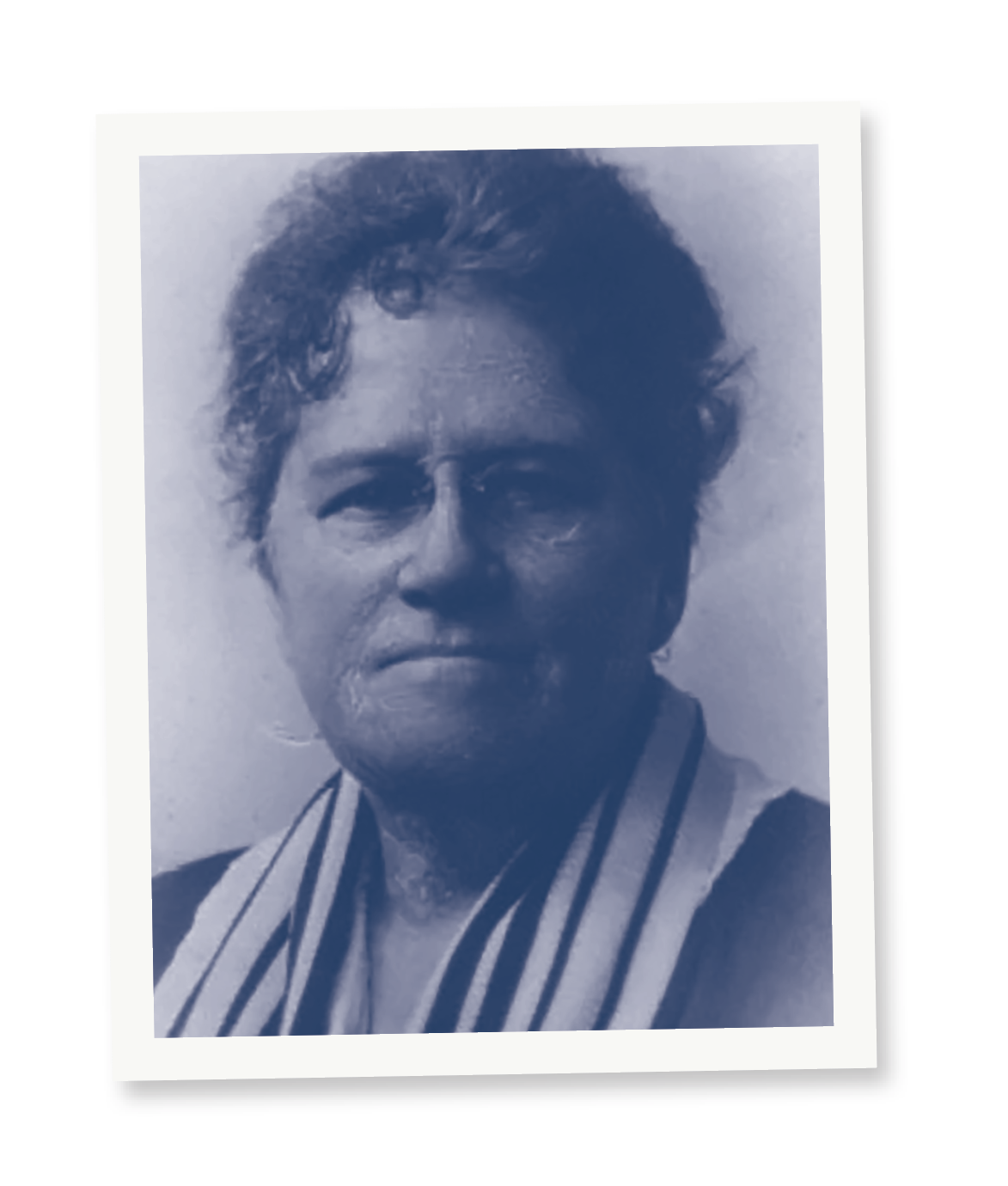
Mrs. White’s testimony is chilling in other ways. To her, it was clear that no one thought the ship would sink. “Some of them said, ‘You cannot get on tomorrow morning without a pass.’ They never would have said those things if anybody had had any idea that the ship was going to sink,” she testified.
Mrs. Menei reads the stories of the Daughters who survived the Titanic disaster and draws a couple of conclusions.
“These stories show just how committed and resilient DAR members are,” she said. “No matter the circumstances, they will press on and help others. Even in this immense crisis, these brave Daughters still had their mindset of service, trying to save other people as much as possible.”
Additionally, she said, it shows that Daughters are everywhere. “Truly, if it happened after 1890, there’s probably a DAR connection,” Mrs. Menei said. “Thank goodness for the leadership and training these Daughters possessed. Whether on those lifeboats or through their accomplishments after the tragedy, they made a difference.”
Other DAR Members Aboard the Titanic
Olive Potter Earnshaw Croluis of the Philadelphia DAR Chapter was rescued on Lifeboat 7 along with her mother. After the disaster, she divorced her husband and became a lifelong volunteer for the Red Cross.
Olive’s mother, Lily Wilson Potter, also belonged to the Philadelphia DAR chapter. After the disaster and throughout World Wars I and II, she volunteered for the Red Cross. She died in 1954 at 98, having never taken another voyage. She said, “You can’t go through an experience like that without feeling that you escaped an awful fate and should not risk the same again.”
Alice Munger Silvey, a DAR member from Duluth, Minnesota, lost her husband in the tragedy.
Kornelia Andrews of Hendrick Hudson DAR Chapter, Hudson, New York, died two years after the disaster.
Charlotte Wardle Cardeza, the Registrar of Caesar Rodney DAR Chapter, Wilmington, Delaware, occupied one of the Titanic’s most expensive suites, costing 512 pounds at the time (or about $64,000 today). Mrs. Cardeza and her son, Thomas, and their servants were all rescued in Lifeboat 3.
Dr. Alice Farnham Leeder, a DAR member from Maine, wrote in a letter to a friend on April 20, 1912, “It was terrible. … Many of the passengers have only their night clothes with coats over them, I shall never forget the sight of that beautiful boat as she went down, the orchestra playing to the last, the lights burning until they were extinguished by the waves.”
Anna S. Atkins Warren, a DAR member from Portland, Oregon, lost her husband in the disaster. She later became an active member of her church and the YWCA until she died in 1925.
Visit the Titanic Memorial Statue
American sculptor and DAR member Gertrude Vanderbilt Whitney designed the Titanic Memorial Statue, which was a tribute to the men who lost their lives in the Titanic disaster so that “women and children might be saved,” as the inscription reads. After a decades-long women’s fundraiser that capped donations at $1 each, it was dedicated in 1931 at a location along the Potomac River about a mile from DAR Headquarters. In 1968, because of the construction of the Kennedy Center, it was moved to its current home along the Washington Channel.