Judge of All Trades
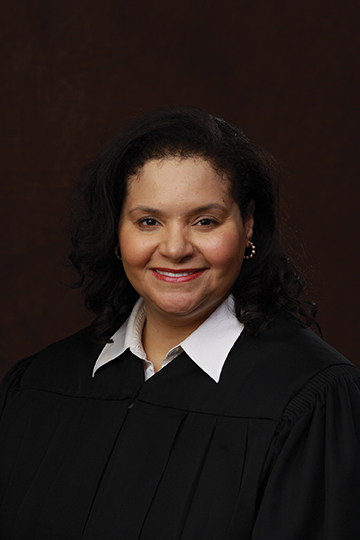
Many words could describe Ada Brown’s legal career. Impressive would be one, given the fact that she’s one of the youngest women to ever hold a federal judicial seat. Interesting would be another. Judge Brown, who is African-American and a member of the Choctaw Nation, has worked on all sides of the law over the course of her 21-year career. She has been a criminal prosecutor, a civil litigator, a law professor, a trial court judge, an appellate court justice and now, since 2019, a U.S. district judge in the Northern District of Texas.
The variety has been surprising, even to her.
“I went to college to become an orthodontist, but I decided to pursue a career in law,” Judge Brown said. “I just assumed I’d always be a lawyer arguing cases in court, but having the opportunity to look at the law through all of these different lenses helped prepare me for the wide variety of cases I hear today.”
Despite its name, the Northern District of Texas actually covers Dallas and over 100 counties in northern and central Texas. Presiding over such a large district means there’s also constant variety in Judge Brown’s courtroom.
“I’ve heard cases involving high-level narcotics distribution, fatal plane crashes and everything in between,” said the member of the Elizabeth Gordon Bradley Chapter in Waco, Texas.
When not in trials or hearings, Judge Brown spends her time researching legal issues for upcoming cases. While some civil cases go to trial, the majority of criminal defendants enter a plea, which means their cases move straight to sentencing.
“It’s a responsibility I do not take lightly,” she said. “I spend a lot of time reading through people’s life stories and focusing on the facts of the cases before me. I try very hard to craft individual sentences. I do not want to sentence anyone to more time than they deserve, but justice must be served.”
The Scales of Justice
While there are individual tasks that make up Judge Brown’s job, and those can look very different from day to day, they all fall under the same purview: being a guardian of constitutional rights.
“It’s my job to make sure that anyone who comes into my courtroom gets treated fairly because that is their constitutional right,” she said. “We often think of the Constitution as this document from long ago, but we affirm its relevance every time we uphold its principles and guarantees.”
Judge Brown attributes her strong sense of responsibility to the fact that she is a role model. Though she is not the first African-American woman to become a judge in the United States (that distinction was earned in 1966), nor is she the first American Indian woman to hold a federal judicial position (a milestone that occurred much more recently in 2014), she recognizes the impact her appointment will have on generations of women to come.
“I’m not a trailblazer but a lucky beneficiary of all the amazing women who came before me,” she said. “I stand on the shoulders of those women, and I benefit from the barriers they broke. Now it’s up to me to do the absolute best job I can so young people of all colors and backgrounds can see clearly that they can do this, too.”
Judge Brown, who grew up near Oklahoma City, credits her parents for instilling a strong work ethic and a can-do-anything attitude. “I remember I got a book about careers, which listed jobs for boys and jobs for girls,” she said. “My mom took a marker, scratched out ‘boys’ and ‘girls’ and told me, ‘You can be anything.’”